How long does custom software take, and what drives the cost?
Most custom software projects at Devuptime take between 6 weeks and 8 months; a high-complexity ERP can take up to 12 months. Automating one specific process sits at the short end of that range, a complete management system at the long end. The cost depends on three things: how many screens and features the system needs, how many other systems it has to connect to, and how many business rules it has to enforce. Scope, timeline and price are agreed in writing before any code is written.
How pricing works
We don't publish a price list, because two projects with the same name can differ by a factor of ten. What moves the number:
- Screens and features. A tool used by one department with a handful of screens costs far less than a system that covers sales, finance and operations.
- Integrations. Each connection to an existing ERP, CRM, payment provider or legacy database adds work, especially when the other system has no documented API.
- Business rules and exceptions. Approval chains, pricing rules, permissions by role and the cases your team handles “differently” are where most of the effort goes.
- Platforms. A web system only, or web plus iOS and Android apps.
- Data migration. Bringing years of history from spreadsheets or an old system is its own piece of work.
After a short discovery conversation you receive a written proposal with the feature list, the delivery schedule and a fixed price. Nothing starts before you approve it.
Who we build custom software for
We build custom software for companies that have outgrown spreadsheets and off-the-shelf tools. Since 2008 we have delivered management systems, process automation and integrations that adapt to the way a company already works, instead of forcing the company to adapt to the software.
Why invest in custom software
- The system follows your process. Off-the-shelf software makes you change how you work. Custom software starts from how your team already operates.
- No per-user subscription. You pay for development once; there is no license fee that grows every time you hire.
- It connects to what you already use. ERP, CRM, accounting, e-commerce, payment providers: we connect the new system to the tools already running.
- The code is yours. You receive the source code with the system. You are not locked in to any vendor, including us.
- It grows with the company. New features go in when you need them, not when a vendor's roadmap gets to them.
What kind of systems we build
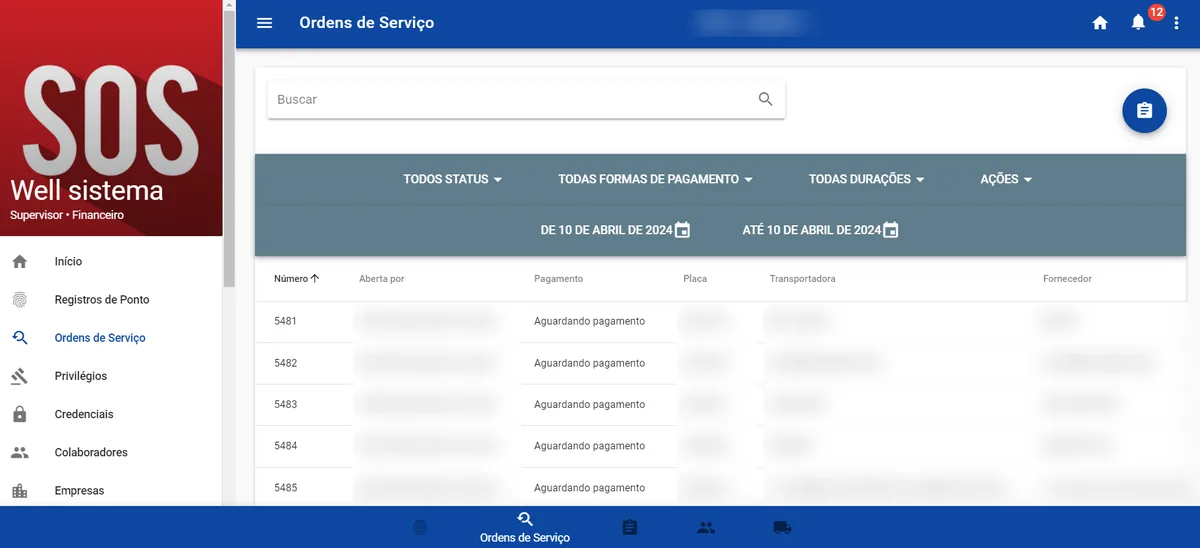
Custom ERP and management systems, CRMs that match your real sales pipeline, inventory and logistics control, client portals, automation of internal processes that currently live in spreadsheets, integrations between systems that don't talk to each other, and KPI dashboards so leadership can follow the business without asking for reports.
See the details of our business management software, including custom ERP development and systems integration. If you need ongoing development capacity without hiring in-house, see our dedicated development team model; if you want to hire a complete project, see how it works to hire a software development company.
Off-the-shelf or custom: how to decide
Off-the-shelf software makes sense when your process is standard for your industry and adapting to the product costs little. Custom software pays off when the process is what sets you apart from competitors, when license costs grow too fast with headcount, or when your team already spends hours of manual work getting around the limits of the current system. If you're unsure, the discovery phase helps you decide, and we will tell you plainly when a ready-made product would serve you better.
How the development process works, step by step
- Discovery: we map the current process, including the exceptions, and what the system has to solve. You receive a prioritized feature list.
- Fixed-scope proposal: scope, timeline and price in writing before a single line of code.
- Design and development: you approve the screens and typically receive a working, testable version every 15 days, so course corrections happen along the way and not at the end.
- Testing and rollout: acceptance testing with the people who will use the system, data migration when needed, and team training.
- Warranty and evolution: bug fixes are covered by the warranty set in the contract (90 days by default); new features come as later phases, each with its own timeline and price.
The source code, the database and all access credentials belong to your company from delivery, and the project can be covered by a non-disclosure agreement (NDA).
Working with a team in Brazil
We are based in Guarulhos, in the São Paulo metro area, and work remotely with clients in the United States, such as Better Maids in New Jersey and Better People USA. Our business hours are 9 am to 6 pm Brasília time (UTC−3), which is one to two hours ahead of US Eastern time depending on daylight saving, so a good part of your working day overlaps with ours.
Want to know what your system would take? Send us a message and we'll reply within one business day. You can also see systems our clients use every day in our portfolio.