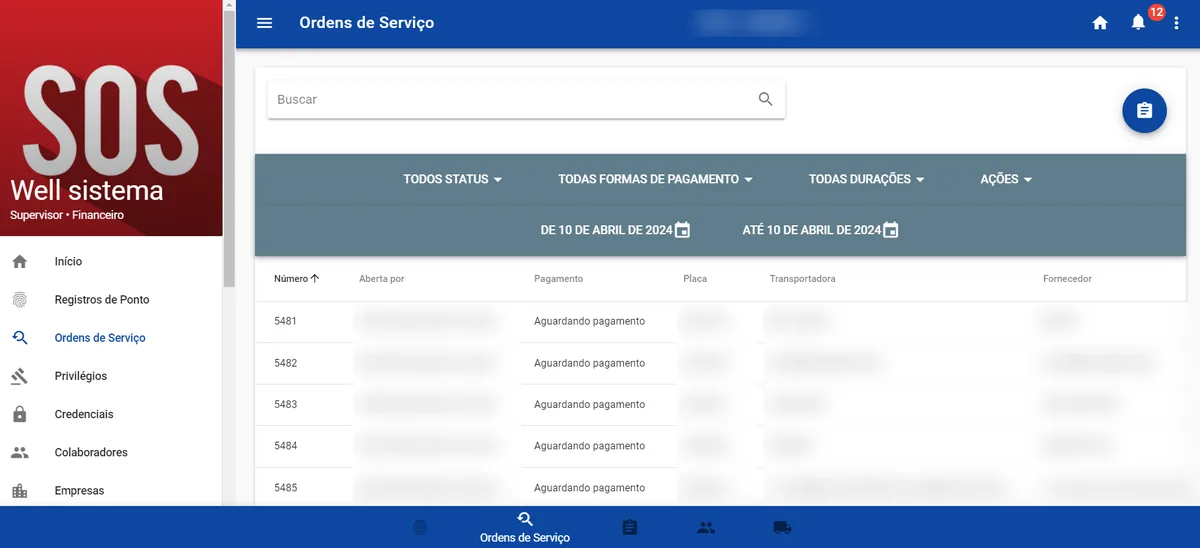
When does custom business management software make sense?
Custom business management software is built for your company's process, instead of forcing your company into a vendor's process. Devuptime has built management systems since 2008, with timelines from 6 weeks to 8 months depending on scope: finance, inventory, CRM, client portals, automation and integrations. You receive the source code with the system, so you are not tied to any vendor, including us.
If what you need is an ERP, meaning integrated purchasing, sales, finance and operations in a single system, the dedicated page is custom ERP development, with modules and the real risks of that kind of project.
When off-the-shelf software stops working
Off-the-shelf software is the right choice in most cases: it costs less, goes live quickly and covers what is standard in the market. We say that openly, and if a ready-made product solves your problem, that is what we'll recommend.
It starts getting in the way when you see these signs:
- Your team keeps side spreadsheets to cover what the system doesn't do. That rework costs hours nobody measures.
- The process that sets you apart doesn't fit the software. If the way you operate is a competitive advantage, bending it to generic software means giving that advantage up.
- License fees grow with your headcount. Per-user pricing becomes a cost that rises exactly when the company is doing well.
- Your systems don't talk to each other. Someone types the same data in two or three places, with the errors that come with it.
- You're waiting on a vendor's roadmap for a feature you need now.
Types of systems we build
- Custom ERP: integrated purchasing, sales, finance and operations, modeled on your real workflow. See details.
- Systems integration: connects the tools you already use (ERP, CRM, accounting, e-commerce, bank) so data is entered only once. See details.
- Financial management: accounts payable and receivable, cash flow and reconciliation, following your business rules.
- Inventory and logistics: receiving, shipping, stock counts and tracking, connected to sales.
- CRM that matches your real pipeline: the sales process your team already uses, not a tool's generic model.
- Client portals: customers check orders, documents and invoices on their own, taking volume off your support team.
- Internal process automation: what is done by hand in spreadsheets today runs on its own.
- KPI dashboards: leadership follows the business without asking for reports.
How pricing works
Automating one specific process typically takes 6 to 10 weeks; a complete management system, 3 to 8 months. The price depends on the number of screens and features, the integrations required and the amount of business rules involved. You receive a written proposal with scope, timeline and a fixed price before any work starts.
How to tell if it pays off
The most honest calculation compares the cost of a custom system with what you already spend today without noticing. Add up, per year:
- The subscription fees of every system that would be replaced, multiplied by the number of users and by 12.
- The hours of rework: people feeding side spreadsheets or typing the same data twice, multiplied by your team's hourly cost.
- The cost of the errors manual processes create: stockouts, wrong invoices, lost orders.
A custom system is a one-time investment plus maintenance; a subscription is a permanent cost that grows with the company. Put the two side by side over three to five years and the decision usually becomes clear.
How we work
- Discovery: we learn how the company operates today, where the bottlenecks are and what the system needs to solve. This is where we tell you if a ready-made product would be a better fit.
- Fixed-scope proposal: what will be delivered, the timeline and the price, in writing, before any code.
- Development in sprints: deliveries every 15 days, with the system working and you following along. Course corrections happen during the project, not at the end.
- Rollout, training and support: data migration, team training and a bug-fix warranty set in the contract (90 days by default).
Why Devuptime
We have built software since 2008 from Guarulhos, in the São Paulo metro area, Brazil, and work remotely with clients in the United States. Because we also build mobile apps and websites and run digital marketing, your system is designed from the start to connect with the rest of your operation. See the Remaferpa 360° logistics system and other projects in our portfolio.
Want to talk about your case? Send us a message and we'll reply within one business day.